


AI Is Transforming Everything, But Who’s Making the Rules?

Artificial Intelligence is here and it is reshaping how we learn, work, communicate, and even govern. This is the moment where we determine who gets to decide how it impacts our lives and influences our future. Does this power belong to a small group of tech executives and billionaires or to all of us? The technology is exciting, and it holds enormous promise. But as we saw in NBC Connecticut reporting, our elected officials are not aligned on who should protect the public as AI rapidly expands into every corner of life.
President Trump is now pushing for a single federal standard that would block states from regulating AI, further consolidating wealth and influence and stealing the public’s ability to weigh in and protect ourselves. Meanwhile, leaders in Congress are debating moratoriums, regulatory frameworks, and national rules.

Here in Connecticut, Attorney General William Tong joined a bipartisan coalition urging Washington to allow states to protect their own residents.
Senator Richard Blumenthal has also made his position clear: states must have authority to act. People deserve safeguards, not blank checks for industry.
Numerous public serving organizations have raised the alarm on the importance of studying the impact AI will have on learners and workers today and in the future. The Economic Policy Institute stresses that, “Corporations do not need a blank check and a deregulated landscape to succeed in creating and selling artificial intelligence, automated decision systems, and related technologies. The balance of power already tilts too far in favor of employers.”
Unfortunately, our State Senator Paul Cicarella sees it differently.
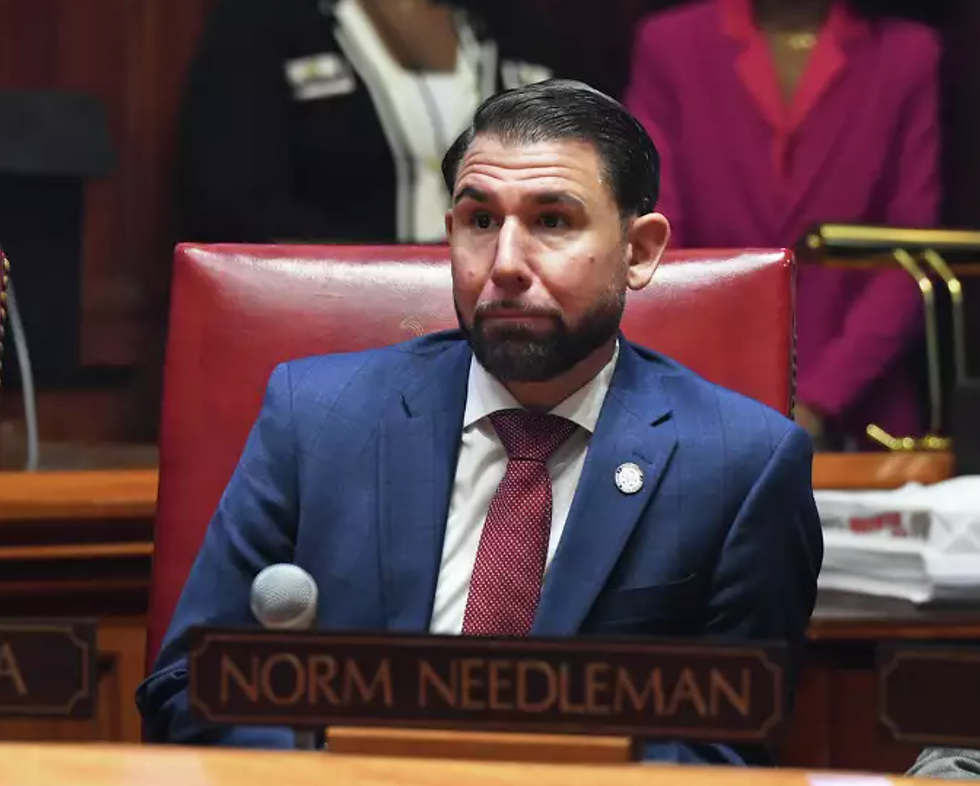
In the recent NBC Connecticut story, Senator Cicarella argued that individual state regulations could “drag the industry to a halt,” proudly stating that he has opposed Connecticut regulating AI.
This position mirrors the talking points coming from major tech companies like Nvidia—who naturally prefer weak oversight and maximum freedom to use public information without accountability.
And it raises a very serious question:
Who exactly is Senator Cicarella protecting? Tech corporations, or the people of North Haven?
Connecticut has always taken public safety, consumer protection, and data privacy seriously. AI raises issues in all three areas. Yet our State Senator’s position reflects no interest in learning the implications or advocating for residents.
This isn’t just a difference in opinion, it’s a lack of responsible leadership. AI is already affecting the public—and Connecticut needs a thoughtful response
Today’s most powerful AI platforms are trained using public information created by:
local news organizations,
universities,
government agencies,
and public health institutions.

Local news is at risk
These sources were built to serve the public good, yet tech companies are able to scrape, ingest, and commercialize them without compensation or consent.
As those organizations lose revenue, we risk a future where:
credible medical information goes behind paywalls
learners and workers are exploited
local journalism disappears (see: the absolute lack of coverage of anything happening in North Haven)
misinformation becomes the cheapest option
This isn’t hypothetical—it’s already happening. And it demands focused, informed legislative leadership at the state level. This is not “anti-technology.” It is basic public responsibility.
Connecticut can be a leader if our leaders take the issue seriously. Reasonable regulation could include:
Policy Recommendations:
Transparency in AI Training Require companies to disclose what data sources were used to train LLMs. Mandate opt-out protocols (e.g., honoring robots.txt) and create enforceable rights for creators and institutions.
Establishing Safety Guardrails for High-Stakes AI Systems
Implement appropriate safety guardrails in areas where AI is being used to make important decisions about people’s lives, like housing, lending, employment, and government services. (CT State Democrats)
Create the AI Safety Institute
Promoting responsible, ethical and trust-worthy AI development, the Institute will provide tools, guidance, and best practices to help businesses, particularly small and medium-sized enterprises, design AI systems that are safe, unbiased, and aligned with internationally recognized standards. It will encourage organizations to conduct impact assessments and adopt industry-leading practices from the outset of AI development. (CT State Democrats)
Attribution and Source Linking Encourage or require LLMs to surface citations and live links to original sources in outputs, ensuring content producers receive visibility and downstream benefit.
Fair Compensation Models Support development of frameworks that allow AI companies to license training data or pay into a revenue-sharing pool that compensates original content providers.
Public Investment in Open Knowledge Allocate funding for public-interest content platforms (e.g., medical, civic, educational) that remain freely available — and are protected from AI content laundering.
Consumer Labeling for AI-Generated Content Enact guidelines to clearly distinguish AI-generated content, especially in contexts like healthcare, legal advice, or news.

None of this “halts innovation.” It ensures technology develops responsibly and protects the public interest.
Unfortunately, Senator Cicarella’s dismissal of state action suggests he is not prepared to engage in these issues technically, economically, or ethically.
Simply put: this is not in his wheelhouse, and North Haven deserves a senator who understands the stakes.
Leadership means more than saying “industry should figure it out” and we trust them to do so. AI is not just a business story. It touches health, education, jobs, privacy, democracy, and public information.
When a state senator says he is routinely opposed to even considering Connecticut-based protections, that is not innovation, it is abdication of responsibility and it is a bad idea.
We need leaders who are willing to learn, willing to legislate, and willing to put residents before corporations.
The North Haven Democratic Town Committee supports innovation. But we also believe that public information belongs to the public. Technology should work for people, not the other way around.

AI isn’t going away. But neither should Connecticut’s voice in shaping how it impacts our lives.
North Haven deserves a senator who treats this with the seriousness it demands.
AI is moving fast. The least we can ask is that our representatives keep up.



Comments